HMOs & residential blocks
Security systems for HMOs and residential blocks
Door entry, access control, CCTV and fire alarms for houses in multiple occupation, flats and residential blocks, for landlords, managing agents and management companies.
- SSAIB registered installer
- Free site survey
Looking for home security? View residential security
Industry-leading technology














Why shared residential buildings are different
In a house or block with several households, the front door is shared by people who did not choose each other and who change over time. That leads to familiar problems: keys that were never returned, doors propped open for deliveries, visitors following a resident in, and no one quite sure who is responsible when something goes wrong. It is a different job from securing a single home.
The people using the building are residents, not employees. The system has to be simple enough to use without training, reliable enough that residents do not work around it, and respectful of their privacy. Cameras belong in shared areas such as entrances and hallways, not in or pointing into anyone’s home.
There are usually several people involved: the landlord, a managing agent, sometimes a management company, and the residents. We work out early who decides what, and who will look after the system afterwards, so that installation is not followed by an argument about who deals with a fault.
Where we typically install, and why
Shared front door
The most important door in the building. A panel with call buttons or a reader, a door that closes and locks properly behind people, and a camera covering it.
Hallways, stairs and landings
Communal routes that everyone shares and that must stay clear for escape. Fire detection is the priority here, with cameras only where they help.
Bin, bike and meter stores
Often the least secure part of a building, and sometimes where problems begin. A reader or lock on the store door and a camera covering it.
Rear and side doors, fire exits
Doors needed for escape are also the doors that get propped open. We plan how they release, how they close and how they are alarmed.
Car park and forecourt
External cameras cover parking and approaches, and where there is a controlled entrance we plan that with the rest of the system.
Individual rooms and flat doors
Entry to each room or flat stays the tenant’s own lock. We do not put cameras or sensors inside private accommodation. Handsets in flats connect to the shared entrance.
What we install
Door entry and intercom
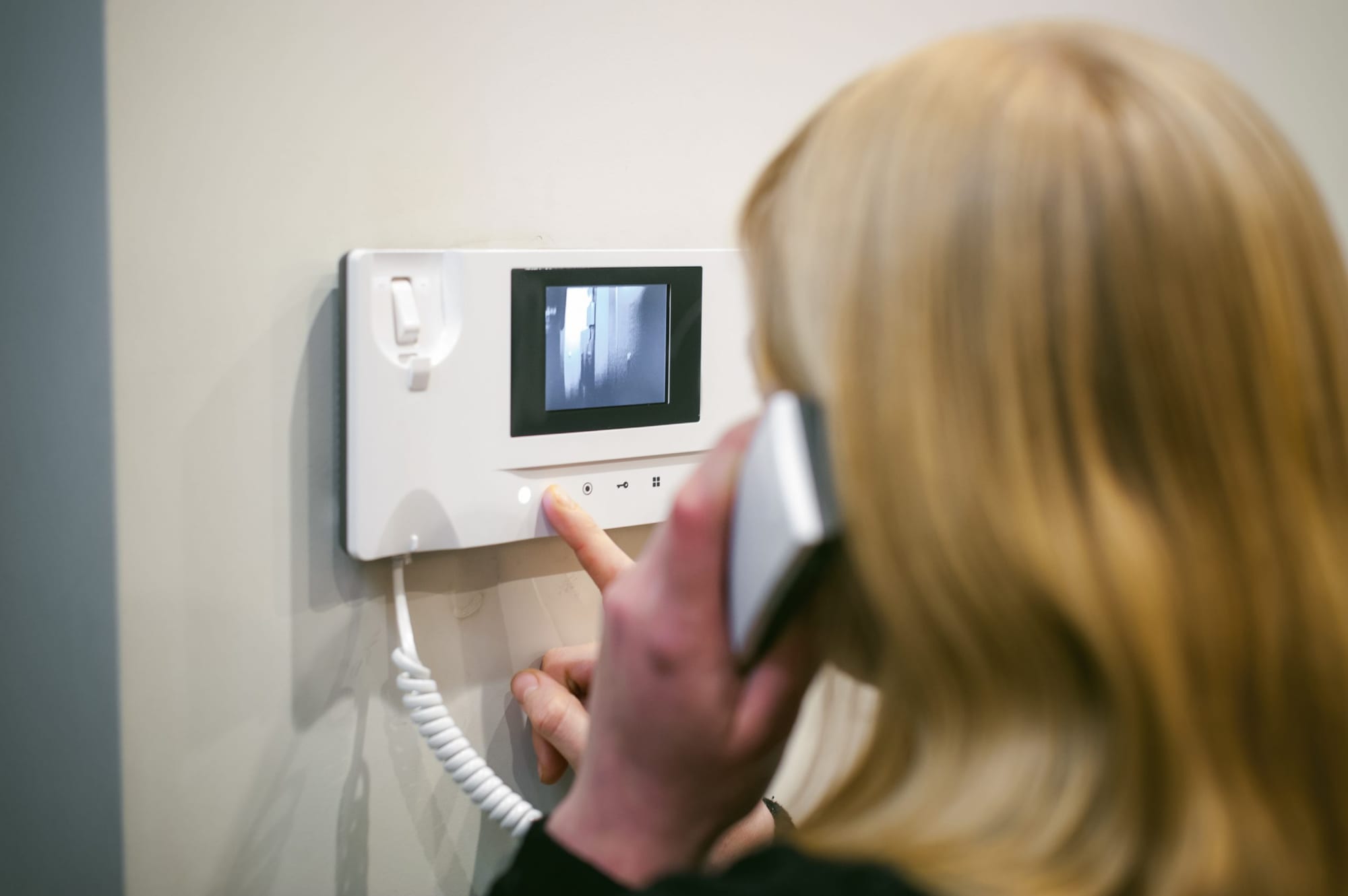
Audio or video entry panels with a handset in each flat or room, so residents can see who is calling before releasing the shared door. Suitable for purpose-built blocks and converted houses.
Access control
Fob or card entry for the shared door and communal stores, with each tenant’s fob issued individually and switched off when they move out, without changing locks.
CCTV for communal areas
Cameras on the entrance, hallways and outside areas, with recording kept for a set period and access limited to the agent or landlord.
Fire alarms
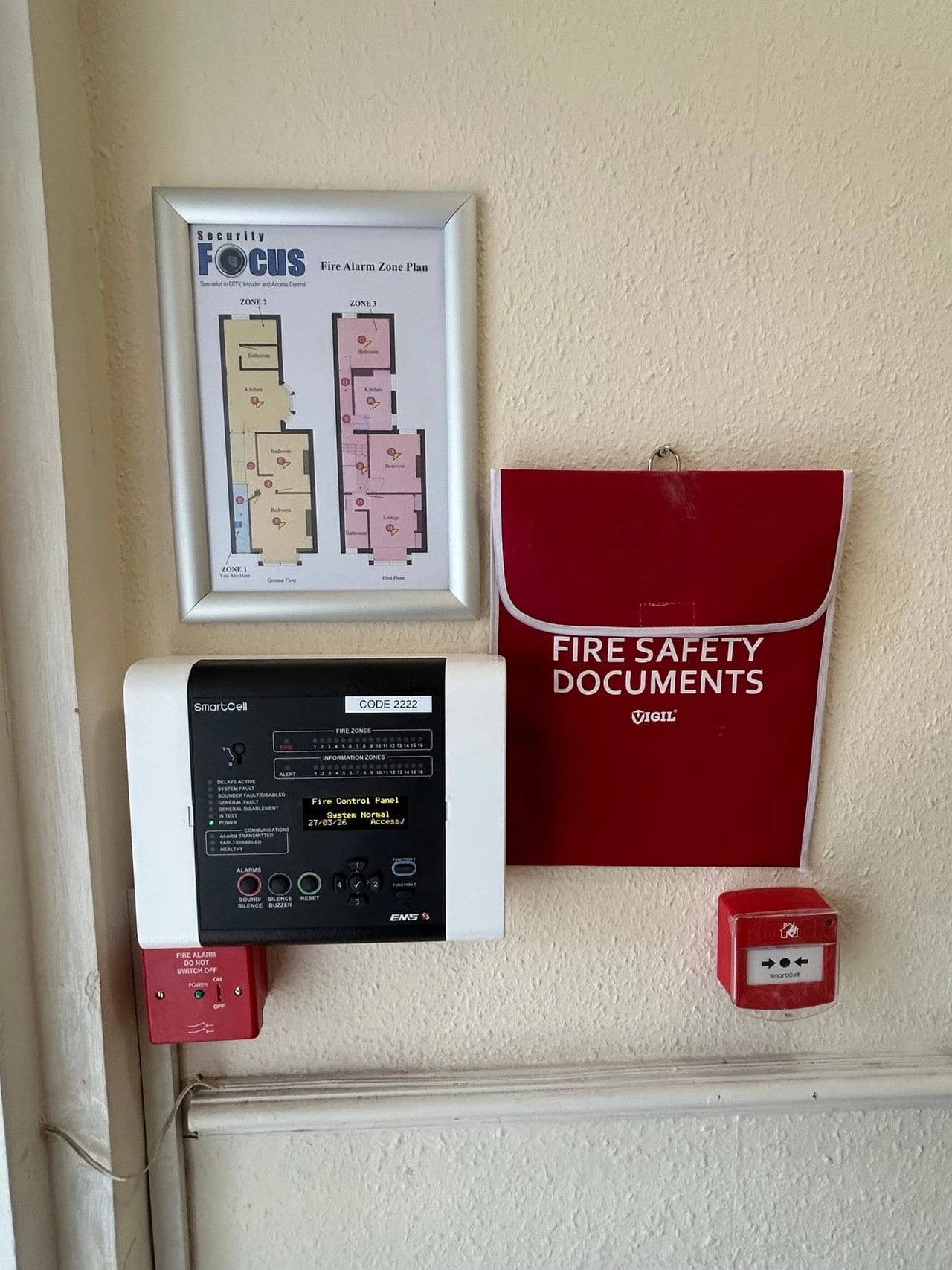
Detection and sounders in communal areas and, where the building calls for it, in individual rooms or flats. The BS 5839 category and coverage follow from the fire risk assessment.
Intruder alarms
For plant rooms, communal areas and empty properties between tenancies, set up so the agent or landlord can manage who has a code.
Maintenance and servicing
A servicing arrangement for the entry system, fire alarm and cameras, so faults are found by testing before residents have to report them.
Shared entrances
The door everyone uses
The shared front door decides most of how secure a residential building is. If it does not lock, is regularly propped open, or has too many keys in circulation, nothing else makes up for it.
A door entry system puts a panel outside and a handset in each flat or room, so residents can see and speak to a caller before letting them in. Fobs or cards let residents in without pressing anything, and each can be switched off individually when someone moves out, which is much quicker than changing a lock and reissuing keys.
Doors that stay open are usually doors that are awkward to use: a slow closer, a stiff lock, a handset that does not work. We look at the practical side, closer and release included, because a system that residents work around does not help anyone.
Video door entry that records or streams footage of callers falls under the same data protection duties as CCTV, and residents should be told what is recorded and who can see it. The ICO and GOV.UK publish guidance. This is general information, not legal advice.
How we work
From first survey to final handover
- 01
Survey the whole building
We look at the shared door, communal areas, stores and exits, speak to the managing agent or landlord, and ask how deliveries, contractors and tenant changeovers work at the moment.
- 02
Specification and quote
You receive a written specification you can share with the landlord, agent or management company, and a clear quote.
- 03
Installation with minimal disruption
We arrange access with the agent and, where residents are affected, give notice of the work and when it will happen, so nobody is caught out.
- 04
Handover and support
We show the agent how to add and remove fobs and handsets, and can arrange regular servicing so faults are dealt with in an organised way.
Reviews
What our customers say
01 / 03
“Excellent CCTV and alarm installation. Professional, reliable and highly recommended.”
Suleyman Gul
Enfield
What landlords and managing agents come to us for
- Door entry for shared front doors
- Fobs that can be switched off when a tenant leaves
- CCTV on entrances and communal areas
- Fire alarms for shared hallways and stairs
- Secure bin, bike and meter stores
- Fewer lost keys and propped-open doors
- Servicing so faults are found before residents report them
FAQ
HMO and residential block questions
Can each tenant have their own fob?
Yes. Each fob or card is issued to one person and can be switched off on its own, so one lost fob does not mean changing anything for the other residents.
What happens when a tenant leaves?
Their fob is deactivated in the system, usually within minutes, without changing locks. The handset for their flat or room can be reassigned to the next tenant.
Who is responsible for fire alarms in shared areas?
Under the Regulatory Reform (Fire Safety) Order 2005, the responsible person for the shared parts of a residential building has to make sure a fire risk assessment is carried out. Who that is in your building depends on ownership and management arrangements, which we cannot decide for you. We can carry out assessments and install and service the alarms.
Can you put cameras in shared hallways?
Yes, for entrances and communal areas, with data protection duties in mind, such as telling residents and controlling who can see the footage. We do not put cameras inside private rooms or flats.
How much does a residential block system cost?
It depends on the number of flats or rooms, the layout of the building and what is already there, so we do not quote without seeing it. The survey is where it is confirmed, followed by a written specification and a clear quote.
HMOs and residential blocks
Get door entry and security for your building
We look at the communal entrance, doors and shared areas, then send a written specification and quote for door entry, CCTV and fire alarms.