
Home intruder alarms
An intruder alarm your household will actually use
Wired and wireless alarms for family homes, designed around your routines, your pets and the way the house is laid out, and controllable from your phone.
- SSAIB registered installer
- Free site survey
Looking for business security? View business security
Industry-leading technology














Why so many home alarms end up switched off
An alarm only protects a house when it is set. The most common reason for a home alarm sitting unused is not a fault, it is annoyance. It goes off when the cat comes downstairs. The keypad needs a sequence of button presses that only one person in the household remembers. A detector in the hallway is triggered by a radiator or a window blind. After a few false alarms, everyone stops bothering, and the system that was fitted to protect the house does nothing at all.
A well-designed alarm removes those problems before they start. Detectors are chosen and positioned for the rooms they cover and the animals that live there. Zones are divided so you can set the ground floor at night while you sleep upstairs, and set everything when you go out. Codes and fobs are simple enough for the whole family to use, and the keypad sits where you naturally reach for it.
Intruder alarms are graded 1 to 4 under EN 50131, the European standard adopted across the UK. The grade reflects how resistant a system is to being defeated and is chosen from the risk your property presents, not its size. We establish the right grade at the survey, together with the wiring approach, detector positions and how you want to control it.
Remote control
Alarm apps
Your alarm is controlled through the manufacturer's own app. Choose your system's brand to see its app and download it.

Texecom Connect
by Texecom
Texecom's app for your alarm. Set and unset the system, get instant notifications and manage your devices from one screen, wherever you are.
- Set and unset from your phone
- Instant notifications
- View camera footage
- Manage devices remotely


The system
What a properly designed home alarm includes
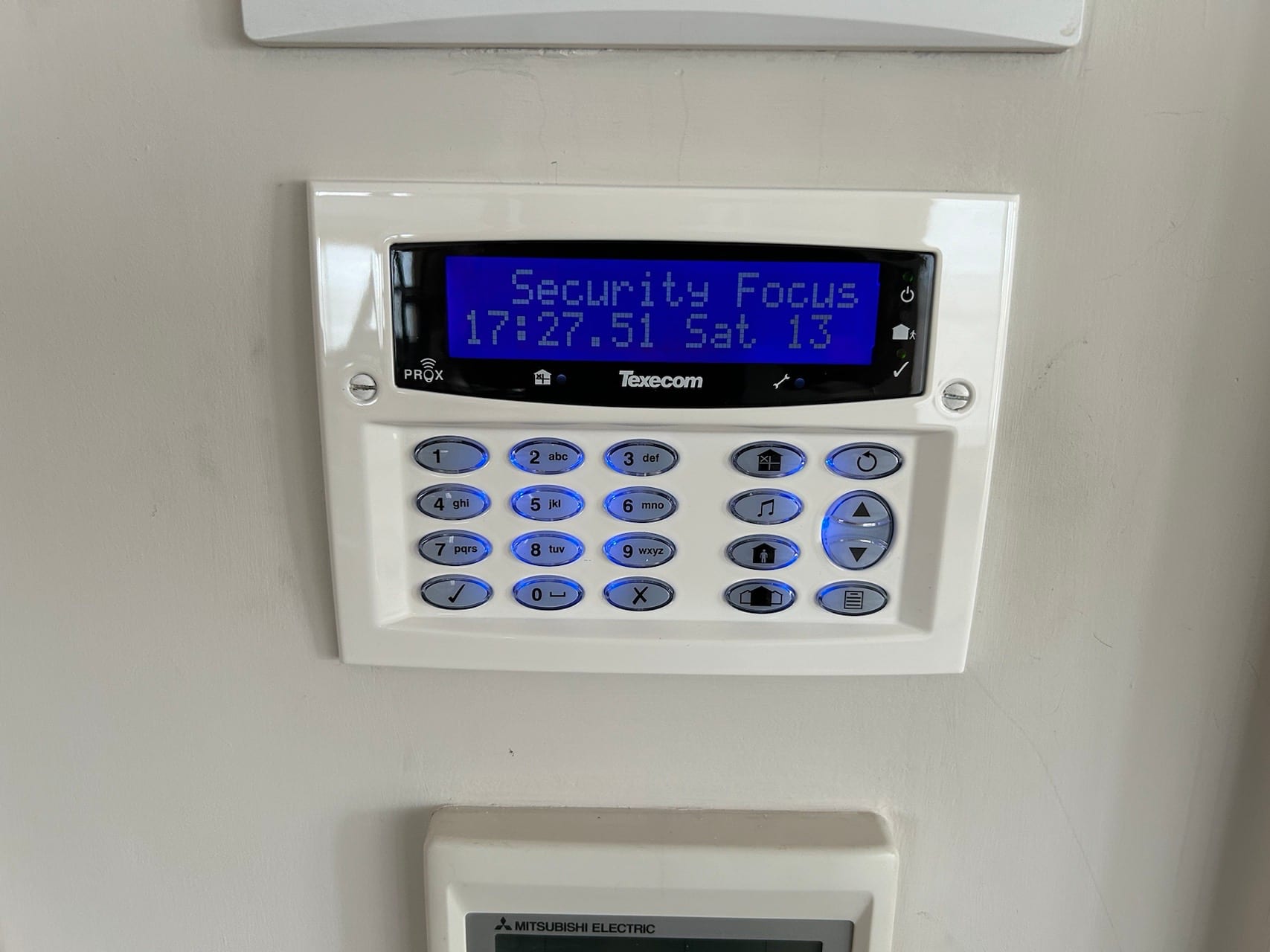
Control panel and keypad
The panel is the brain of the system and the keypad is how you talk to it. We place the keypad where the household will use it, usually by the door you leave and return through.
Door contacts and motion detectors
Door and window contacts detect an opening, while motion detectors cover rooms and corridors. Where a pet roams freely, detectors designed to ignore animals up to a stated size can be used, if the layout suits them.
External sounder
A visible sounder on the front of the house tells a would-be intruder that the property is protected, and sounds if the alarm is triggered. We position it so it is seen without spoiling the look of the house.
Wired or wireless
A wireless alarm has the features of a wired system without the cabling, which suits a finished home where cables would mean lifting floors or redecorating. We install both, and recommend whichever fits your house.
Control from your phone
The HomeControl+ app lets you control, set and disarm your burglar alarm from anywhere in the world. An internet connection is required.
Standby power
Alarm control panels are normally designed with a standby battery, so the system keeps working through a power cut. How long depends on the equipment specified, and we tell you what applies to yours.
Day to day
Living with an alarm
Going to bed
Part-setting arms the ground floor and leaves the bedrooms and landing free, so you can get up in the night without anything sounding. Setting it takes a moment and becomes routine quickly.
Leaving the house
Full setting arms every zone and gives you time to leave and close the door. Entry and exit routes are planned so the timings suit the way you use the front door.
Pets in the house
You can leave a pet-friendly detector in the room where the animal sleeps, or leave that room out of the set zone at night. Which suits you depends on the animal and the layout, and we look at it at the survey.
Cleaners, visitors and family
On most panels, different people can have their own codes or fobs, so one can be changed or removed without affecting everyone else. That is much tidier than sharing a single code that never gets changed.
Children and teenagers
A short, memorable code or a fob is easier for younger household members than a long sequence. We set the system up with the youngest and the least technical user in mind.
When something changes
If the alarm sounds, a fault shows on the keypad or the internet drops, the panel tells you what has happened. We show you what the common messages mean before we leave.
How we work
From first survey to final handover
- 01
Survey and risk check
We look at entry points, the layout, pets and the way the household lives, and establish the right alarm grade and detector positions.
- 02
Specification and quote
You receive a written specification showing the equipment, where it goes and how it is controlled, with a clear quote.
- 03
Installation and testing
Our engineers fit the panel, keypad, detectors and sounder, test every part and set the zones to suit your routine.
- 04
Handover and support
We walk the household through setting, unsetting and part-setting, and we maintain the system we install.
Recent home alarm installs
Reviews
What our customers say
01 / 03
“Excellent CCTV and alarm installation. Professional, reliable and highly recommended.”
Suleyman Gul
Enfield
What homeowners ask us for
- An alarm that copes with pets
- Setting just the ground floor at night
- Wireless, with no cables through the house
- Arm and disarm from my phone
- Simple codes for the whole family
- A visible external sounder
- Fewer false alarms
FAQ
Home alarm questions
What is the difference between wired and wireless alarms?
A wireless alarm has the features of a wired system without the cabling. Wireless suits a finished home where running cables would be disruptive. Wired can suit a new build, a major renovation or a house where the cabling is straightforward. We install both for homes and businesses, and recommend the one that fits your property.
Can I have an alarm if I have pets?
Yes. A home alarm can be designed to live with pets. Detectors designed to ignore animals up to a stated size can be used in rooms where a pet roams, or those rooms can be left out when the alarm is set at night. Which suits you depends on your pets and your layout, and we look at it at the survey.
What happens to the alarm in a power cut?
The alarm normally keeps working. Control panels are usually designed with a standby battery that supports the system through a power cut. How long that lasts depends on the equipment, and we tell you what applies to the system specified for your home.
Can I control my alarm from my phone?
Yes. With the HomeControl+ app you can control, set and disarm your alarm from anywhere in the world, as long as you have an internet connection. Our smart home and remote viewing page covers how this fits together with cameras and door entry.
What do alarm grades 1 to 4 mean?
Alarm grades, defined by the EN 50131 standard, describe how resistant a system is to being defeated, based on the level of risk a property presents. Grade 1 suits low-risk properties and Grade 4 suits high-risk premises. Some insurers set minimum requirements for alarms, so tell us if yours does. A site survey establishes the right grade for your home.
Related
Alarms work best alongside other layers
Home CCTV
Cameras show you what is happening, while the alarm tells you something has. They work well together.
Smart home & remote viewing
Control the alarm, view cameras and check the door from one place.
Intruder alarms for a business
Protecting an office, shop or warehouse as well? See our business alarms page.
Home intruder alarms
Get a home alarm designed around your house
The survey looks at your doors, windows and how your household uses the house. You then get a written proposal and quote for a wired or wireless alarm.