
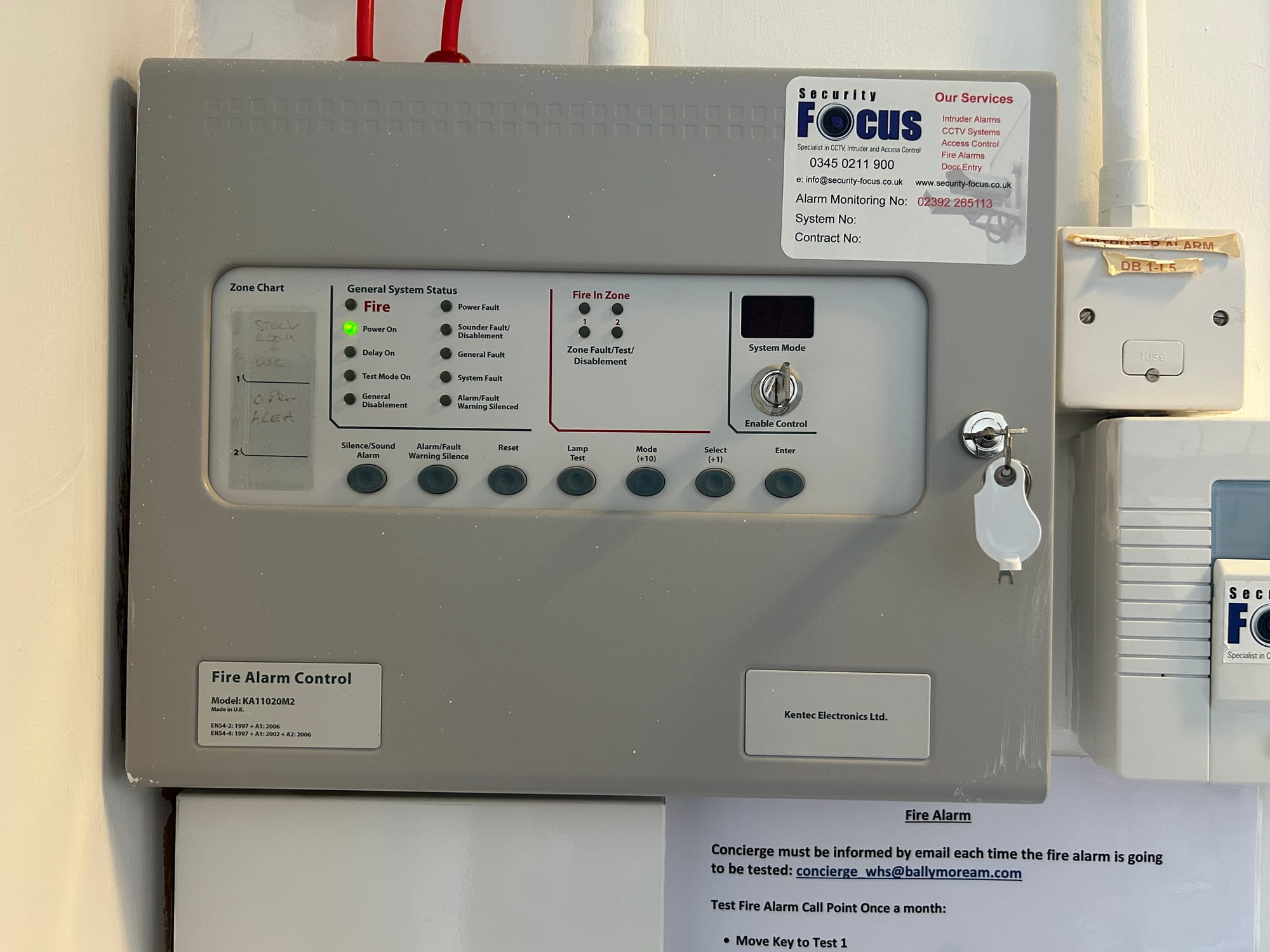
Commercial fire alarms
Fire alarm systems designed around your building and your fire risk
Detection, call points and sounders placed where your premises need them, installed with as little disruption as possible and serviced afterwards. SSAIB-registered installer, established 2007.
- SSAIB registered installer
- Free site survey
Looking for home security? View residential security
Industry-leading technology














A fire alarm is a responsibility, not just equipment
Under the Regulatory Reform (Fire Safety) Order 2005, each business has a responsible person, usually the employer, owner or whoever controls the building. Their duty is to take all reasonable steps to eliminate or reduce the risk of fire, for the people who work there and for visitors. The fire alarm is one part of that, and it has to match the building it protects.
The common mistakes are a system installed years ago that no longer reflects how the building is used, detection missing from an extension, and sounders that cannot be heard in noisy areas. A layout change, a new tenant or a converted storeroom can all leave a once-suitable system out of step.
We design commercial fire alarms for premises across Stevenage, Hertfordshire, London and Essex from the survey, not from a standard package, and you receive a written specification before we fit anything.
What goes into a properly designed commercial fire alarm
The right category of system
BS 5839 describes categories by purpose. L1 to L5 protect life, from detection throughout the building to one specific risk. P1 and P2 protect property. Your fire risk assessment points to the right one.
Detector types and positions
Kitchens, plant rooms, dusty workshops and quiet offices are different environments. We choose and place detectors to suit each, so alarms are timely without being triggered by everyday activity.
Zones and the control panel
The building is divided into zones, and the panel shows where a detector or call point has been triggered, so staff and responders can find the source quickly.
Call points and sounders
Call points sit on escape routes and at exits, and sounders are placed so the alarm can be heard in every occupied area, including noisy production floors and rooms with doors closed.
Wireless where it helps
Wireless fire alarms suit occupied buildings, listed buildings and businesses that cannot accept the disruption of a cabled installation. They can run on batteries or mains power.
Installation methods
Cable routes, fixings and finishes are planned with the building in mind, including how to keep work away from stock, customers and sensitive areas while it is under way.
How the system fits into running the business
The responsible person
Whoever holds the responsibility needs to understand how the system works, how it is tested and what to do when it activates. We explain the panel and its indications at handover.
Routine testing and records
Between service visits, staff can carry out simple tests, and keeping a record of tests, faults and false alarms helps you see problems early and shows you have been attentive.
Regular servicing
Fire alarms need specialist servicing to stay reliable and to help you keep up with your safety duties. We agree a schedule that suits the building and the system.
Shared and multi-tenant buildings
Where several occupiers share a building, the alarm has to work across all of it. We design the zoning and sounder coverage with that in mind.
When the layout changes
A new partition, an extension or a change of use can affect detection and sounder coverage. Tell us about changes and we will check whether the alarm still fits.
How we work
From first survey to final handover
- 01
Survey and risk picture
We walk the premises, look at how the building is used and where people are, and take account of any fire risk assessment you already have.
- 02
Specification and quote
You receive a written specification setting out the category, the zones and the equipment, with a clear quote, ready to share with colleagues or your insurer.
- 03
Installation around trading hours
We agree working times first, and where possible plan the work to keep disruption to staff and customers low.
- 04
Handover and servicing
We show the responsible person and staff how the system works, and we can service it on a schedule agreed at handover.
Recent fire alarm installs
Reviews
What our customers say
01 / 03
“Excellent CCTV and alarm installation. Professional, reliable and highly recommended.”
Suleyman Gul
Enfield
What businesses ask us for
- The right category of system for the building
- Detection where it is needed, not everywhere
- Call points and sounders on escape routes
- Wireless installation with less disruption
- Regular servicing
- A system that follows the fire risk assessment
FAQ
Commercial fire alarm questions
What do the L1 to L5 and P1 to P2 categories mean?
They are categories from BS 5839. L systems protect life, from detection throughout the building including escape routes (L1) down to one specific risk (L5). P systems protect property, from detection throughout the premises (P1) to defined areas (P2). Which one applies follows from your fire risk assessment.
Do I need a fire risk assessment before a new fire alarm?
A fire risk assessment is what tells you which category and coverage the building needs, so it makes sense to have one first or alongside the alarm design. We can carry out fire risk assessments as well as design and install the system.
Can wireless fire alarms be used in a commercial building?
Yes, in many buildings. Wireless systems avoid cabled installation and suit occupied buildings, listed buildings and businesses that cannot accept disruption. The survey confirms whether wireless is suitable for your layout.
How often should a fire alarm be serviced?
There is no single answer for every building. The schedule depends on the system and the premises, and we set it out at handover so it is clear who does what and when. Regular specialist servicing helps keep the system reliable and helps you keep up with your safety duties.
How much does a commercial fire alarm cost?
It depends on the size and layout of the building, the category of system, the number of detectors and call points, and whether it is wired or wireless. We do not give a figure without seeing the premises. The free survey is where it is confirmed, and you then receive a written specification and a clear quote.
Related business security
Commercial fire alarms
Talk to us about the fire alarm in your building
We look at the premises alongside your fire risk assessment, then send a written specification and quote. Installation, servicing and upgrades.