
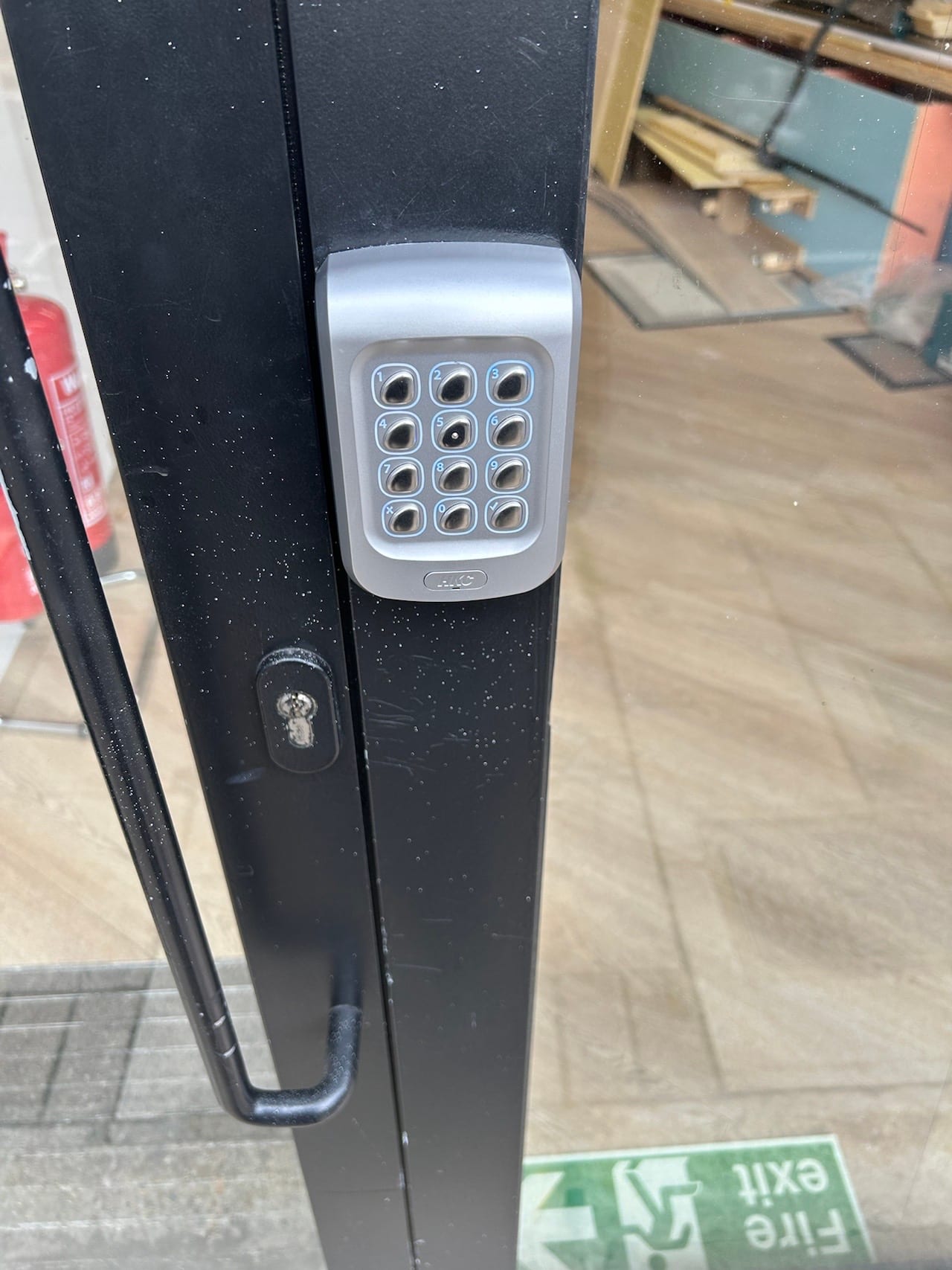
Commercial access control
Access control that shows who went where, and when
Keypad, fob and card systems that let the right people through the right doors at the right times, and take the cost and delay out of changing locks. SSAIB-registered installer, established 2007.
- SSAIB registered installer
- Free site survey
Looking for home security? View residential security
Industry-leading technology














Keys tell you nothing about who used them
A key opens a door for anyone holding it, and once it has been copied you have no way of knowing. When someone leaves, the only sure way to close the gap is to change the locks and reissue keys. Even then, you still cannot say who went into the stockroom on Tuesday evening.
Electronic access control replaces that with credentials you can issue and withdraw individually, doors that only open for the right person at the right time, and a record of every use. Adding, removing or restricting a credential typically takes minutes rather than the cost and delay of rekeying. We design commercial access control for premises across Stevenage, Hertfordshire, London and Essex.
The design starts with a site survey. We walk the building with whoever manages it, decide which doors need controlling, who needs to get through them, and how the system should behave on an ordinary day and in an emergency. You receive a written specification before we fit anything.
What goes into a properly designed access control system
The right credential
Codes, fobs, cards and mobile credentials each suit different situations. A shared code is hard to change when someone leaves, while fobs and cards can be withdrawn one at a time. Many sites use more than one.
Readers, locks and door hardware
The reader, the lock and the way the door is released all have to suit the door: its material, how busy it is and whether it is on an escape route.
Access levels and schedules
Different roles get different doors, and different hours. Reception staff, warehouse operatives, managers and cleaners do not all need the same access.
The controller and its software
The software is where you add people, change their access and pull reports. It is designed to be usable by whoever administers it day to day, without specialist training.
An audit trail
A log of who used which credential at which door, and when, is useful for security reviews and for investigating an incident. It also answers many questions without needing camera footage.
Doors, turnstiles, gates and barriers
Access control can govern ordinary doors, revolving doors, turnstiles, gates and vehicle barriers, depending on what the premises need.
How it works day to day
Reception and main entrance
Staff enter freely with their credential while visitors are dealt with at reception, so the main entrance stays secure without holding up the working day.
Stockrooms, server rooms and plant rooms
Restricted rooms open only for the people who need them, and the record shows who used them and when.
Out of hours and contractors
Cleaners, delivery drivers and contractors can be given access for the times and doors they need, and nothing more.
Joiners and leavers
A new starter is issued a credential. A leaver’s is switched off immediately. There is no rekeying, and nobody keeps a copy.
Shared and multi-tenant floors
Different occupiers have their own controlled areas, while common parts remain open to everyone who needs them.
Fire and escape
How controlled doors behave when the fire alarm sounds is designed in from the start, so security never gets in the way of getting out.
How we work
From first survey to final handover
- 01
Survey the doors
We walk the building, list which doors need controlling and who uses them, and check how each door is built and how it is used.
- 02
Specification and quote
You receive a written specification showing every door, reader and lock, with a clear quote, and a plan for how access levels will be set up.
- 03
Installation around trading hours
We agree dates and hours first and plan the work door by door, so entrances stay usable while it goes on as far as the building allows.
- 04
Handover and training
We set up your first users and access levels, show the people who administer the system how to manage it, and can service it afterwards.
Recent access control installs
Reviews
What our customers say
01 / 03
“Excellent CCTV and alarm installation. Professional, reliable and highly recommended.”
Suleyman Gul
Enfield
What businesses ask us for
- Different access by role and by time
- A record of who went where, and when
- Lost fobs cancelled without changing locks
- Controlled doors for stockrooms and plant rooms
- Visitor and contractor access
- Turnstiles, gates and barriers where needed
- An upgrade from keys
FAQ
Commercial access control questions
What happens when someone loses a fob or card?
It can usually be deactivated individually within the system in minutes, without rekeying any locks. That is one of the main advantages over a key-based system. A replacement can then be issued and the old one stops working.
Can different people have different access at different times?
Yes. Specific parts of a building can be controlled, limiting who can enter and when. Roles, doors and times can be combined, so a cleaner may have access to certain areas outside normal hours while most staff cannot.
Can access control work with our door entry and fire alarm?
It can be designed to. During the survey we look at how the system should work with anything you already have, including door entry and fire alarm interlocks, so that doors behave properly on an ordinary day and when the alarm sounds.
Can you replace our existing key system?
Yes. Many organisations replace key-based systems with electronic access control for easier administration and lower running costs. We can also look at extending an existing electronic system in many cases, depending on its age and make.
How much does commercial access control cost?
It depends on how many doors are controlled, the type of door and lock, the credentials chosen and the software. We do not give a figure without seeing the premises. The free survey is where it is confirmed, and you then receive a written specification and a clear quote.
Related business security
Door entry and intercom
Deal with visitors at the door before they get further in.
Commercial CCTV
Put a face to the entry in the record.
Commercial fire alarms
Doors and alarms that work together.
Schools
Controlled entrances for pupils, staff and visitors.
Gyms and fitness studios
Member and staff access, including early and late hours.
Gates and access control at home
The residential version of this service.
Access control
Control who can get in, and when
Tell us about your doors and who uses them. After a free survey you get a written specification and a quote for fob, keypad or card entry.