
Commercial intruder alarms
Intruder alarms your staff can live with every day
Wired and wireless alarm systems designed around your premises, your opening and closing routine, and the level of risk your building presents. SSAIB-registered installer, established 2007.
- SSAIB registered installer
- Free site survey
Looking for home security? View residential security
Industry-leading technology














An alarm is only as good as the routine around it
Most business alarm problems are not about the equipment. They are about a system that is fiddly to set, so it gets left off; one shared code that nobody dares change; a detector aimed at a heater or a hanging stock rail; or a grade that was never matched to the risk. Each one is avoidable if the system is designed for the people who use it, in the building they use it in.
We design commercial intruder alarms for premises across Stevenage, Hertfordshire, London and Essex by starting with the building and the day. Who opens up, and by which door? Who closes? Do cleaners arrive before or after everyone else? Are there stockrooms or offices that need protecting separately? The answers shape the zones, the keypads and the codes.
A site survey establishes all of that, and you receive a written specification before anything is fitted.
Remote control
Alarm apps
Your alarm is controlled through the manufacturer's own app. Choose your system's brand to see its app and download it.

Texecom Connect
by Texecom
Texecom's app for your alarm. Set and unset the system, get instant notifications and manage your devices from one screen, wherever you are.
- Set and unset from your phone
- Instant notifications
- View camera footage
- Manage devices remotely


What goes into a properly designed commercial alarm
The right alarm grade
Intruder alarms are graded 1 to 4 under EN 50131, according to how resistant they are to being defeated. The grade follows the risk, not the size of the building. Insurers sometimes set requirements, so check your policy.
Zones and separate areas
Splitting the building into areas lets you set the stockroom while staff still work in the office, or protect one tenant’s space without affecting another’s.
Detector choice and placement
Movement detectors, door contacts and glass-break sensors each suit different jobs. We position them to cover the routes an intruder would take and to keep away from heaters, fans and moving stock.
Keypads and user codes
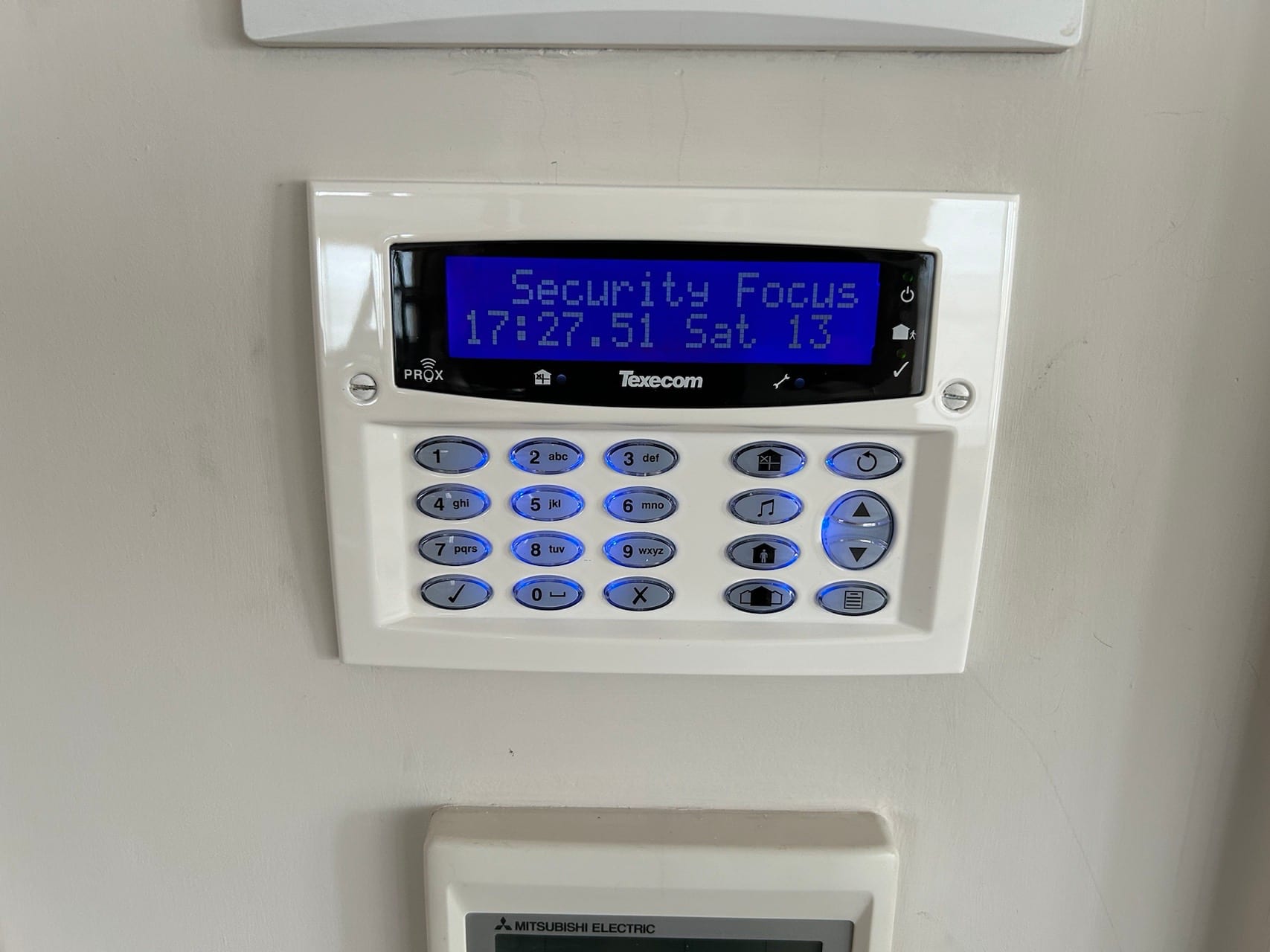
Keypads placed where staff naturally enter and leave, with individual codes so a leaver can be removed without changing everyone else’s. Access can be limited for cleaners and contractors.
Sounders and tamper protection
An external sounder makes an activated alarm obvious from outside, and tamper protection on the panel and detectors means the system reacts if someone interferes with it.
Wired or wireless
Wired suits new builds and refurbishments where cabling is easy. Wireless suits occupied or listed buildings and layouts that change. Some sites use a mix of both.
How the system is used day to day
Opening up and closing down
A clear entry route, an exit time that gives people long enough to leave, and a keypad in a sensible place. If the routine is easy, it gets followed.
Cleaners, contractors and early arrivals
People who come in outside normal hours can have their own codes and, where the panel allows, limited access, so you know who set or unset the system and when.
Stockrooms and sensitive areas
The rooms that matter most can be protected separately, so an alarm there is treated differently from movement in a corridor.
Shared and multi-tenant buildings
Different occupiers can arm their own areas without affecting each other, which suits serviced offices and mixed-use buildings.
Control from your phone
Owners and managers can set and unset the system and check its status from an app, which saves a trip when someone forgets or a member of staff cannot get in.
Testing and reliability
Detectors, sounders and batteries wear out or drift. Periodic servicing keeps them working, so you find a fault at a service visit rather than during an incident.
How we work
From first survey to final handover
- 01
Survey the building
We walk the premises, note entrances, vulnerable windows, stock areas and how your staff open and close, and talk through any insurer requirements you know of.
- 02
Specification and quote
You receive a written specification covering grade, zones and equipment, with a clear quote, so everyone who signs off the work can see what is included.
- 03
Installation around trading hours
We agree dates and hours with you first and keep disruption to staff and customers as low as the building allows.
- 04
Handover and training
We set up codes, run through the opening and closing routine with the people who will use it, and can service the system afterwards.
Recent intruder alarm installs
Reviews
What our customers say
01 / 03
“Excellent CCTV and alarm installation. Professional, reliable and highly recommended.”
Suleyman Gul
Enfield
What businesses ask us for
- An alarm grade matched to the risk
- Separate areas that can be set independently
- A simple opening and closing routine
- Individual codes for each member of staff
- Detectors placed to avoid false alarms
- Wired or wireless installation
- Setting and unsetting from your phone
FAQ
Commercial intruder alarm questions
What alarm grade does my business need?
It depends on the risk your premises present, not their size. Grade 1 suits low-risk premises, and Grades 3 and 4 suit higher-risk sites and are more common in commercial settings. Insurers sometimes set a minimum grade, so check your policy. The site survey establishes the right grade.
How do we avoid false alarms?
Start with the right detector in the right place, then a routine staff can follow. Common causes are a door not fully closed, movement inside such as fans or hanging stock, and a wrongly entered code. We position detectors to avoid known triggers and show staff the routine at handover. Regular servicing catches failing batteries before they cause trouble.
Should a commercial alarm be wired or wireless?
Either can be right. Wired systems suit new builds and refurbishments where cabling is straightforward. Wireless systems suit occupied buildings, listed buildings and layouts that change. We install both, and some sites use a mix.
Can you take over or extend an alarm you did not install?
In many cases, yes. It depends on the age and make of the existing panel and detectors, which we check at the survey. Sometimes extending is sensible, and sometimes replacing the panel makes more sense.
How much does a commercial intruder alarm cost?
It depends on the size and layout of the premises, the grade needed, the number of zones and detectors, and whether it is wired or wireless. We do not give a figure without seeing the site. The free survey is where it is confirmed, and you then receive a written specification and a clear quote.
Related business security
Commercial CCTV
Record what happens, and see it from your phone.
Commercial access control
Control who can enter, and when, before the alarm is ever needed.
Servicing and upgrades
Testing and maintenance that keeps an alarm dependable.
Retail stores
Protecting shops and stockrooms when they are closed.
Offices and workplaces
Alarms for shared and multi-tenant buildings.
Home intruder alarms
The residential version of this service.
Commercial intruder alarms
Get a business alarm designed around your site
The survey covers entrances, out-of-hours access and who sets the system. You get it all in writing, with a quote, before anything is fitted.