Choosing between a wired and a wireless intruder alarm is one of the first decisions you'll face when protecting a home or business. Neither is universally "better" — each suits different properties and different priorities.
How each system works
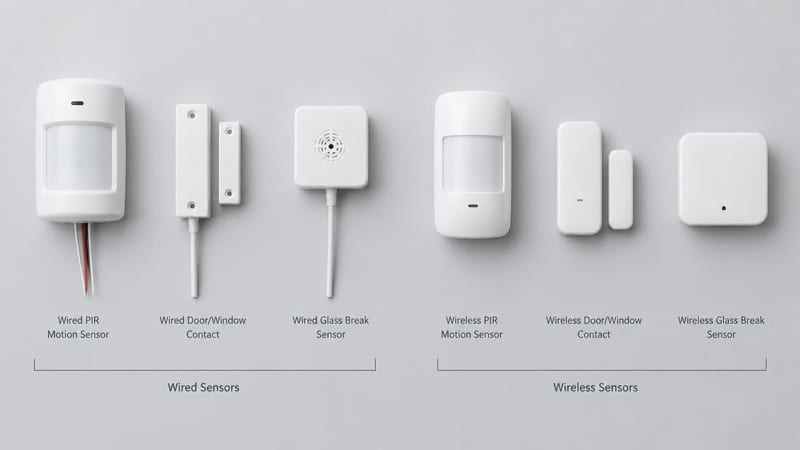
A wired alarm connects every sensor — door contacts, motion detectors, external sounders — back to a central control panel using cable run through walls, floors and ceilings. The panel is usually hardwired into the mains, often with a battery backup in case of a power cut.
A wireless alarm uses the same types of sensor, but each one communicates with the control panel over a radio signal instead of a cable. Sensors typically run on their own batteries, which need periodic replacement.
Where wired tends to suit better
- New builds and renovations — if walls are already open or being replastered, running cable adds little extra disruption and avoids any ongoing battery replacement.
- Larger commercial premises — a wired backbone can be more straightforward to expand and maintain across a big site with many sensors.
- Sites with heavy interference — dense concrete, metal cladding or a lot of other radio equipment can occasionally affect wireless signal reliability; a cabled system sidesteps that entirely.
Where wireless tends to suit better
- Existing properties you don't want to disturb — no chasing cable into walls or lifting flooring.
- Listed or period buildings — where invasive cabling work may not be appropriate or permitted.
- Properties likely to be reconfigured — sensors can be moved or added without rewiring.
What to weigh up either way
- Battery maintenance. Wireless sensors need their batteries checked and replaced periodically — factor this into your ongoing maintenance plan, not just the upfront cost.
- Installation disruption. Wired installation takes longer and is more invasive; wireless is quicker to fit but relies on radio range and signal strength between each sensor and the panel.
- Future expansion. Think about whether you're likely to extend the system later, and how easily each approach allows for that.
- Monitoring and remote control. Both wired and wireless systems can typically be paired with an app for arming, disarming and alerts — this depends on the control panel and monitoring service you choose, not on the wired/wireless distinction itself.
Making the decision
There's no single right answer — it depends on your building, your budget and how much disruption you're prepared to accept during installation. A site survey is the only reliable way to know which approach (or a mix of both) suits your specific property, since cable routes, wall construction and existing wiring all affect what's practical.
If you'd like a system designed around your actual property rather than a generic recommendation, get in touch to arrange a free site survey.