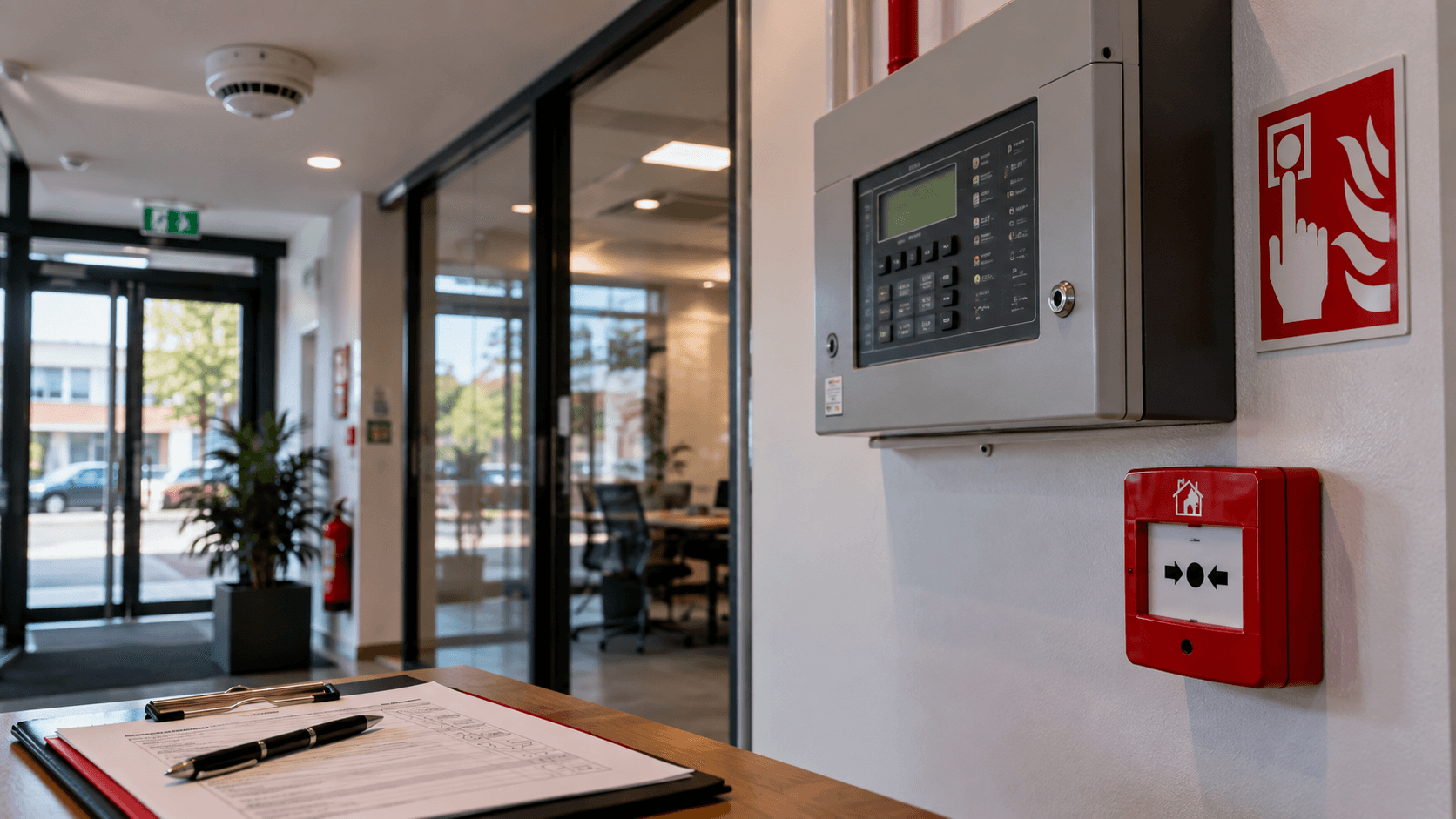
If you're responsible for a workplace or a shared part of a residential building in England or Wales, fire risk assessment isn't optional — it's a legal duty. Here's what that actually means in practice.
What is a fire risk assessment?
A fire risk assessment is a systematic look at a building to identify fire hazards, the people who could be at risk from them, and what needs to happen to reduce that risk to an acceptable level. It results in a written record of the findings and any actions needed.
Who is legally required to have one?
Under the Regulatory Reform (Fire Safety) Order 2005, anyone identified as the "Responsible Person" for a premises — typically the employer, owner, or whoever has control of the building — has a legal duty to carry out and record a fire risk assessment, and to put in place and maintain general fire precautions.
The Order applies to almost all non-domestic premises in England and Wales: workplaces, shops, offices, schools, and the common parts of buildings containing two or more separate homes (shared hallways, stairwells, and similar areas). It doesn't apply to the inside of a single private home.
The Fire Safety Act 2021 later clarified that external walls, flat entrance doors, and the structure of multi-occupancy residential buildings must also be considered as part of the assessment — a change driven largely by lessons from recent building safety reviews.
What does the assessment actually involve?
A thorough assessment typically covers:
- Identifying fire hazards — sources of ignition, fuel, and oxygen specific to the building and how it's used.
- Identifying people at risk — staff, visitors, and anyone who might be especially vulnerable (mobility, unfamiliarity with the building, and so on).
- Evaluating and reducing the risk — assessing whether existing precautions (alarms, extinguishers, escape routes, signage) are adequate, and identifying what needs improving.
- Recording the findings — a written record of what was found and what actions are required, with priorities.
- Reviewing regularly — the assessment needs revisiting whenever the building or its use changes significantly, and periodically even if nothing obvious has changed.
What happens if it's not done, or done poorly?
Fire and Rescue Authorities can inspect premises and enforce compliance, including issuing improvement or prohibition notices where serious failings are found. Beyond the legal duty, an inadequate assessment leaves genuine gaps in protecting the people who use the building.
Next steps
A fire risk assessment should be specific to your actual building and how it's used — a generic template rarely reflects the real hazards and escape routes on site. Get in touch to arrange a visit and a written report with prioritised recommendations.
*This article summarises general legal requirements and is not a substitute for professional legal advice specific to your premises.*